Vietspices Search

Showing posts with label Noodles (Món Bún Phở và Mì). Show all posts

Monday, November 13, 2017

Malaysian Char Kuey Teow (Hủ Tiếu Xào Khô kiểu Malaysia)


I have never felt this productive in my life since my older girl decided to join the cheer team. While there's certainly a lot of joy involved in parenthood, it is not unusual to also feel overwhelmed with  a busy schedule between my two girls' band lessons, art classes, seven days a week of gymnastics and cheer practices, and competitions, leaving me exhausted by the end of the day. It's one of the main reasons why I have been blogging less. But today I was determined to block everything else out and just stay focus on the task at hand.

If you've been following my Facebook page, I have mentioned that I have been cooking up a frenzy to fundraise for a koi pond for my dear husband. We had a beautiful little pond at the old home and I know he misses it.  

One of the dishes I've been making is a Malaysian dish called Char Kuey Teow per a friend's request who misses his homeland food. I have never seen or tasted it but I gave it my best shot. After carefully studying the ingredients of Char Kuey Teow,  I made a first batch and waited for my daughter to come home from school to taste test it. She gave me thumbs up. After delivering Char Kuey Teow to my customers, I anxiously waited for my critiques as if I was on Chopped. I received high marks on my first try, it gave me the confidence to challenge myself even more. Ever since, I have more Malaysian customers who requested me to make Char Kuey Teow almost every week. My husband has been complaining because I sell out every single order of Char Kuey Teow every time and he still hasn't had a chance to taste this dish yet. 

Char Kuey Teow literally means Stir-Fry Rice Cake. It is one of the most popular street food in Malaysia, and is considered a national favorite in Malaysia and Singapore. Many people from all over Asia travel to Penang just to indulge in a plate of it. Char Kuey Teow is made from fresh flat rice noodle and stir-fried over very high heat with shrimps, slices of Chinese sausage, fishcake, eggs, bean sprouts, and chives. It is is traditionally stir-fried in lard, with crisp pork fat cubes to add the smoky flavor, richness, and crispy texture to the dish. I am fond of banana leaves so I like to serve Char Kuey Teow on a piece of banana leaf on a plate not only to enhance the lovely subtle aroma that it lends to the dish but also to achieve a more Penang authentic style.
*
RECIPE: Malaysian Char Kuey Teow
make 2 servings

*
Ingredients


12 oz fresh noodle
8 large shrimps, tail-on, peeled, deveined
12 slices pan-fried fish cake
1/2 Chinese sausage, sliced
3 duck or chicken eggs
a handful bean sprouts, rinsed well and drained.
1/2 handful garlic chives, cut into 1-inch pieces
1/2 tablespoon minced garlic
1 tablespoon bacon grease, or lard, or vegetable oil
1 tablespoon crispy pork fat cubes, optional

for the sauce
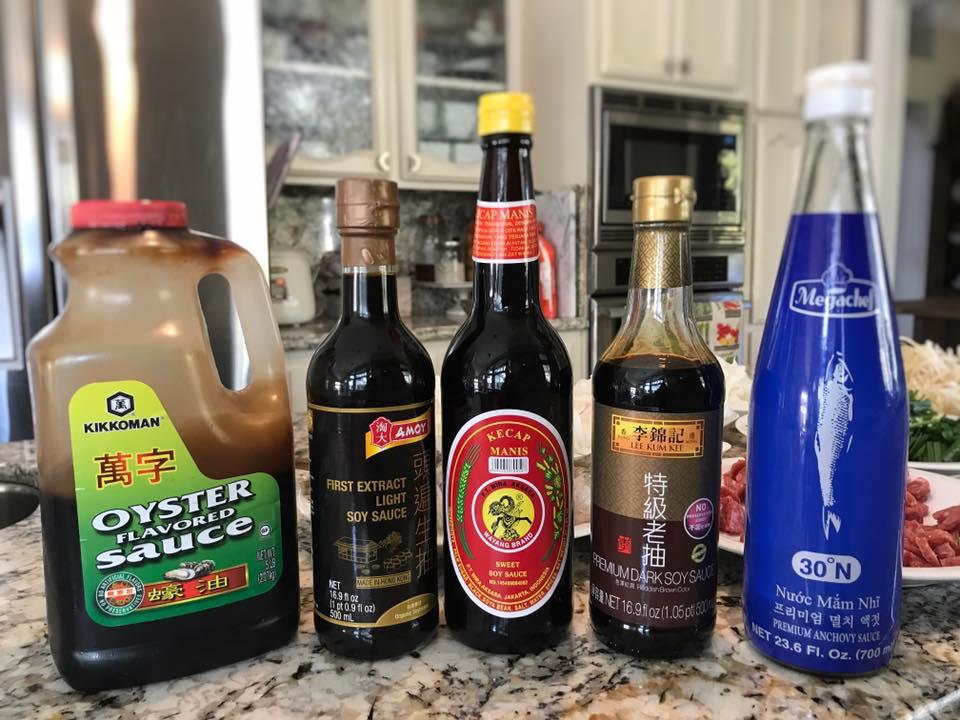

1 teaspoon sugar
1/2 teaspoon black pepper
1/2 tablespoon oyster sauce
1/2 tablespoon fish sauce
2 tablespoons light soy sauce
1 tablespoon dark soy sauce
1 tablespoon sweet soy sauce
*
DIRECTIONS

Preparing Crispy Pork Fat Cubes


Pork fat can be purchased at Asian stores. Ask the butcher. 
Crispy pork fat can be prepared a few days ahead. Remove pork skin. Dice the pork fat into small cubes but not too small. They will shrink during the process. Put them in a large pot and render the pork fat cubes over medium heat, occasionally stirring. As the cubes release more and more fat, the rendered fat tends to splatter quite a bit so be careful. It's done when the pork fat cubes are brown and start to float and not burn. Turn off the stove. The lard pieces will continue cooking in the hot oil. Cook until golden brown. Remove them from the oil. Drain the crispy pork fat cubes on a paper towel or a strainer. Let it cool and store in a air tight jar. Store pork oil separately. Crispy pork fat that is stored on top of the counter top near the stove or in the pantry will last about a month and stays, the freshest longest about a year when you keep it in the refrigerator between uses.

*
Preparing the Sauce


In a small bowl, combine the sauce ingredients and mix well.
*
Preparing Noodle


If you don’t have access to fresh noodle, you can make your own rice noodle (click here for the recipe). Noodle can be kept at room temperature for a day. Do not keep the noodle in the fridge as it becomes brittle. Separate the noodle strands. Set aside.

*
Preparing Fried Fish Cake


Fried fish cake can be homemade or purchased at Asian stores. You can prepare fish cake days ahead.
To make fish cake, combine a pound of tilapia fillets, a shallot or white part of green onion, a tablespoon of fish sauce, ground black pepper, 1/2 teaspoon baking powder, 1 tablespoon tapioca starch in a food processor and whip into a smooth paste. Transfer 1/2 of the fish paste onto the plastic wrap. Wrap it up and flatten it to make a patty. Chill the fish cakes in the freezer for a few hours or overnight. Thaw fish cake before frying.
Heat vegetable oil over medium high heat. Add in the fish cakes and fry for 10 minutes or until golden brown. Flip the cakes occasionally so they brown evenly.


*
Cooking Char Kway Teow


For your Char Kuey Teow to taste like the one in Malaysia requires the right fresh ingredients, tools, and the correct techniques. You need a good quality wok such as cast iron or carbon steel. Non-stick will not work well as it can't withstand super high temperatures. I don't have a wok so I used my All Clad pan.  As I mentioned earlier, Char Kuey Teow requires cooking with lard in high heat to add the smoky flavor, and richness to the dish. It's requires cooking one batch at a time and a quick stirring  of the noodle.  The result is a perfectly soft, slightly charred, smoky flavored noodle.

So be sure to have all the ingredients by your side.


Heat a wok over high heat. Add the lard or vegetable oil. Once the wok is almost smoking, add the shrimps, sausages, and fish cake. Stir quickly until shrimps are almost pink. Add garlic last as it can get burned easily.


Give it a quick stir then add noodle. Quickly pour 3 tablespoons of the sauce over the noodle and stir the noodle quickly in the circle motion starting from the center of the pan with a spatula.


When the noodle is soften and mixed well with the sauce, push the noodle aside or create a spot in the middle.  Crack the eggs (prefer duck eggs as they have a richer flavor) and stir to break the yolks.


Stir the eggs with the noodles until the eggs have almost set. Finally, add chives, bean sprouts, and a tablespoon of crispy pork fat cubes. Continue stir frying noodles and vegetables until combined.

*
Presentation

If you want your Char Kuey Teow to look authentic like Penang style, transfer noodle to a serving plate lined with banana leaf, serve hot and enjoy as is or kick it up a notch with chili sauce.

*
Eat well. Stay healthy.

Thursday, July 20, 2017

Phở Gà Khô Hai Tô (Vietnamese Dry Chicken Noodle)


If you have a chance to visit the mountainous region of Pleiku where I was born, you must try the dry noodle dish (phở khô) - the pride of Pleiku.  When ordering your food, you just called out: "cho một tô phở khô" (give me a bowl of dry noodle) - and automatically they will bring you two bowls.  How's that for service?

Phở khô known as 'phở hai tô' (two bowls of phở). The first bowl consists of noodle and toppings.  The second bowl consists of delicious broth, meatballs, or rare beef. Then served with a plate of bean sprouts, lettuce, and herbs.

Every phở khô place has its own way of preparing a bowl of dry noodle. My favorite place for phở khô gà (dry chicken noodle) was Á Đông (now renamed to Ngọc Sơn). Their dried noodle bowl consists of noodle, shredded chicken, chicken gizzard, heart, liver, and fried pork fat and serve with another bowl of beef broth.


Phở khô Hồng is another of my favorite place.  Her noodle bowl is full of goodness ground pork, fried pork fat, and fried shallots, served with your choice of a bowl of broth with thin slices of beef or beef meatballs.


When eaten, squeeze a bit of lime juice, toss in the vegetables and herbs, a few slices of red chili pepper, and mix them up. Then take your time to enjoy the noodle and sip a spoon of broth at a time. "phở two bowls" is not meant for you to combine into one bowl. You will lose the taste and essence of the noodle flavor and the natural sweetness of the broth.

It's has been over 25 years and yet the aroma of their phở khô and the broth have not faded from my mind. It has definitely left an indelible mark in my food memory band.  I introduced phở gà khô (dry chicken noodle) to my husband and instantly it's become one of his favorite phở.  Here's your chance to try them. 
*
RECIPE: Phở Gà Khô
Ingredients
for broth
1 hen (available at Asian market)
1 large piece ginger, peeled, cut into 3 slices
1 onion, peeled, cut into half or
a handful of shallots, peeled
a handful of garlic cloves, peeled
1 rock sugar, about 1 tablespoon
1 tablespoon salt
1 tablespoon fish sauce
1 packet phở spice
for sauce
3 shallots, thinly slices
4 large cloves of garlic, minced
2 white and light green parts of green onion
1 tablespoon olive oil or annatto oil (recipe here)
1/2 cup Maggi Europe soy sauce
1/2 cup chicken broth
1 tablespoon sugar
1 teaspoon paprika, optional
other ingredients
fried pork fat, click here for recipe
2 bags phở noodle
bean sprouts
lettuces, optional
basil leaves
culantro leaves (ngò gai), finely chopped, optional
cilantro, finely chopped
chili peppers, thinly sliced, optional
lime or lemon, cut into wedges
black pepper
*
Directions 

Cooking the Chicken and Broth


Discard any excess fat from a hen. Rinse hen with cold water and place in a stockpot. Add the water (just enough to submerge the hen), ginger slices, onion or shallots, garlic, rock sugar, salt, and bring to a boil. Once the water is boiling, turn off the heat, cover with a lid and let the chicken sits for another 10-15 minutes.

Remove the chicken, let cool, and shred or cut the meat. You can also cool down the chicken quickly by placing in ice and water.


Reserve the chicken bones to put back into the broth pot.  Add a tablespoon of fish sauce, and a bag of phở spice.

any brand you pick would be fine

Simmer the broth for another 15-20 minutes. Skim any foam that rises to the surface. Taste and adjust the seasoning if needed.  If you like beef meatballs, cut each meatball into half, and add them into the pot. 
*
Preparing Pork Fat


click here for the recipe

*
Preparing the Sauce


Heat olive oil or annatto oil in a sauce pan over medium. The purpose of using annatto oil is to give the sauce its distinctive red color. You can skip the annatto seeds if preferred.  Cook shallots, green onion, and garlic, stirring occasionally, until soft and fragrant. Add sugar, paprika if used, and chicken broth from the broth pot, stirring, until sugar dissolved. Turn the heat off. Add soy sauce last.
*
Presentation


First Bowl - Blanch phở noodle in a pot of boiling water for a couple seconds. If you don't like eating raw bean sprouts, blanch both pho noodle and bean sprouts together. Don't blanch it too long as the noodle will be mushy.


Place noodle into a bowl.  Top with shredded chicken, fried pork fat, fried shallots, chopped herbs, and sprinkle some black pepper.


shredded chicken with egg yolks inside the chicken


Second Bowl - If you like to have steak in your broth, add thin slices or chopped steak into the bowl, then ladle the boiling broth into the bowl.

I prefer serving phở with chopped steak over sliced steak

Otherwise, ladle broth, with or without meatballs into the bowl. Garnish with cilantro and a dash of black pepper.


Serve  'phở hai tô' with a side of  sauce, bean sprouts, lettuces, basil, lime wedges, hoisin sauce, sriracha hot sauce, or chili peppers for each person to garnish their own noodle as desired.


Sunday, April 16, 2017

Shrimp and Crab Vermicelli Noodle Soup (Bún Riêu Tôm Cua)


For the last few days, I woke up in the morning wanting to blog this bún riêu recipe, but it was so difficult to do so from home. Housework is endless and somehow there's too many distractions at home. I had to force myself out of my PJs and get to a place where my creativity can flow and my thoughts are clear and I can just daydream of noodle. A coffee shop always does the trick. 

Bún (noodle) Riêu (meat made of a mixture of crab, shrimps, or ground pork) is a classic Vietnamese. The common ingredients in bún riêu are shrimp and crab meatballs, thin slices of chả lụa (Vietnamese pork ham), fried tofu cubes, and an assortment of herbs and vegetables.

Most of the recipes called for canned “minced crab in spices” then mix with ground pork and eggs to make the riêu, but I prefer to prepare my food, in general, from scratch when I can. The broth of bún riêu is prepared with pork bones then seasoned with salt, sugar, fish sauce, and fermented shrimp paste. When eating bún riêu, I like to squeeze some tangy lime juice into my bowl and enjoy it with a bountiful plate of crunchy, shredded water spinach stems (rau muống), or shredded lettuce, bean sprouts, and assorted herbs. The combination makes for a mouth-water dish. 
*
RECIPE: Bún Riêu Tôm Cua
make 8 quarts of broth
Ingredients
dried vermicelli noodle
fried tofu cubes, optional
*
for Shrimp and Crab Balls
1 pound shrimps, shells removed and deveined 
1/2 pound crab meat
1/4 cup dried shrimps
4 eggs
about 4 green onion, white part only, chopped
1 teaspoon garlic powder
1 teaspoon onion powder
1/2 teaspoon ground pepper
2 teaspoons sugar
1/2 teaspoon salt
*
for Broth
about 3-4 pounds pork bones, or pork neck bones, or pork ribs cut into 2-inch pieces
1 onion, peeled, cut in half
a handful of garlic
4 tablespoons sugar
2 tablespoons salt
2 tablespoons fish sauce
1 tablespoon shrimp paste
4-5 large tomatoes
4 cloves of garlic, thinly sliced
2 shallots, thinly sliced
1 tablespoon annatto oil, for color, optional
*
Accompaniments
iceberg lettuce, shredded
bean sprouts
assorted herbs (perilla leaves, mint leaves) 
water spinach (rau muong), splitted, optional
shrimp paste
lemon or lime wedges
cilantro, coarsely chopped
green scallions, finely cut
*
Directions
*
Preparing Dried Shrimps


Wash dried shrimps then place them in the tea ball strainer. Set aside.
*
Cooking Pork Stock


If using pork neck bones, ask the butcher to cut it into about 3 inch chunks. If  using spare ribs, have them cut into 2 inch pieces.

Blanching pork bones: this step is to be done before boiling to remove any impurities from the bones. In a 8-quart stockpot, cover the bones with cold water, bring to a boil. Cook for a couple more minutes before draining. Remove the bones. Rinse under running cold water. Discard the blanching water.

Cooking Broth: Cover the pork bones again with water. Add onion and garlic. Drop the dried shrimps tea ball strainer in the pot with the hanger hangs from the side of the pot. This is how I soften the dried shrimps and also add a bit more depth and complexity to the flavor. Bring pot to a boil, then reduce to a simmer until the meat is cooked through, at least 45 minutes. Frequently skimming any additional foam, and debris from the surface. Add more water if needed. You can make the stock a day ahead.

*
Cooking Noodle


Cook noodle according to the package instructions. Set aside.
*
Preparing Crab and Shrimps Paste


Remove dried shrimps tea ball straining from the broth pot.   
Place dried shrimps in a food processor and process finely. Set aside.
Place shrimps and white parts of green onion in a food processor and process finely.


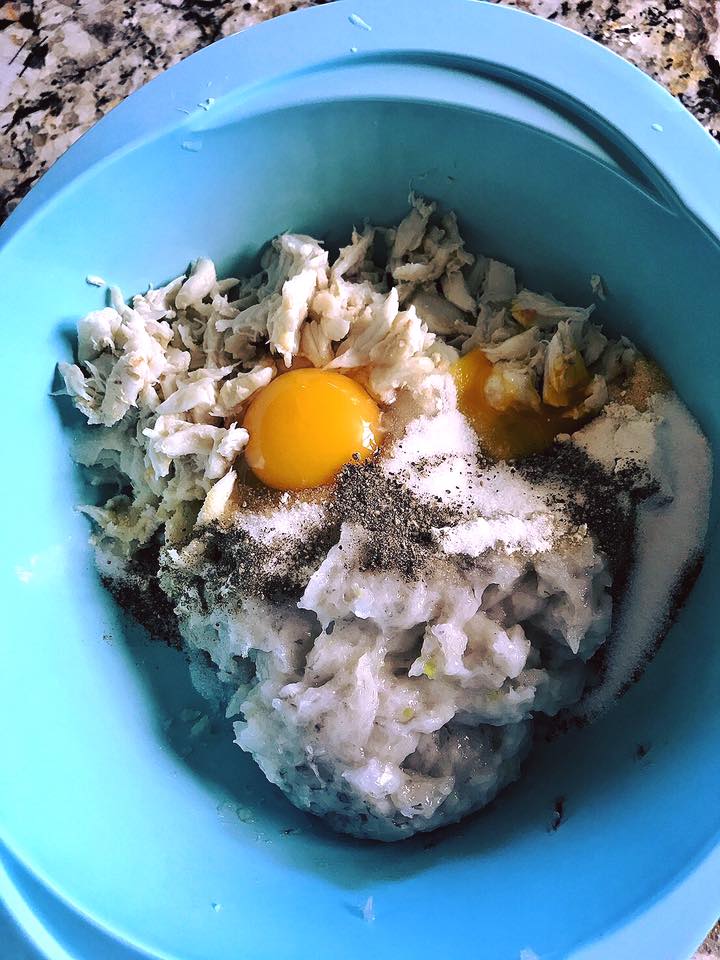
In a mixing bowl, combine dried shrimps, shrimps, crab meat, eggs, onion powder, garlic powder, pepper, sugar, and salt. Mix well.


*
Preparing Tomatoes


Cut tomatoes into wedges. If used cherry tomatoes, cut each one into half.
In a skillet, heat a tablespoon of olive oil and a teaspoon of annatto seeds (aka achiote seeds) over medium heat, and cook, stirring constantly, until the oil becomes a rich, orange-red color, about 2 minutes. Discarding the seeds. The purpose of using annatto seeds is to give the broth its distinctive red color. You can skip the annatto seeds if preferred.


garlic, shallot, annatto oil

garlic, shallots, annatto oil, tomatoes

garlic, shallots, paprika, tomatoes

Add shallot and garlic to the annatto oil and cook until fragrant. Add half of the tomatoes and cook until soft.
*
Cooking Bún Riêu Broth


Liquid a tablespoon of shrimp paste with a couple tablespoons of pork stock. Set aside.


Turn up the heat on the stock pot to a rolling boil. Scoop a spoonful of the crab mixture at a time and drop it into the stock. The crab balls will float to the top once cooked.


Turn the heat down to a medium. Season the pork stock with fish sauce, sugar, salt, and shrimp paste mixture. Add the cooked tomatoes, fresh tomatoes and fried tofu cubes, if used, to the stock pot. Adjust the seasoning to achieve the balance of savory, slightly salty, and natural sweet of broth. Simmer the broth for a little longer, about another 10 minutes.

color of broth without annatto oil

color of broth with annatto oil
*
Presentation


Add noodle to a bowl. Ladle in the soup, pork, crab meatballs, and tofu cubes, if used. Garnish with chopped cilantro and green onion. Serve with shredded iceberg lettuce, or curled stem of water spinach, bean sprout, assorted herbs, and a squeeze of lime or lemon and you are ready for a slurping good time.

 *
Eat well.  Stay healthy.